How to Get References
If all your references are other interfaces, your work drifts toward the average of everything on Dribbble. The designers whose work feels like it came from somewhere are pulling from outside the discipline, and they do it on purpose.
References are inputs. You cannot get out more than you put in.
Where the good ones look
Film. Editors solved "guide the eye through a change" a century before we had transitions. Depth of field, staging, cutting on action. Rauno's essay on depth is basically a film grammar lesson applied to layers and blur.
Here is one of those ideas, translated. A dialog opens over some content.
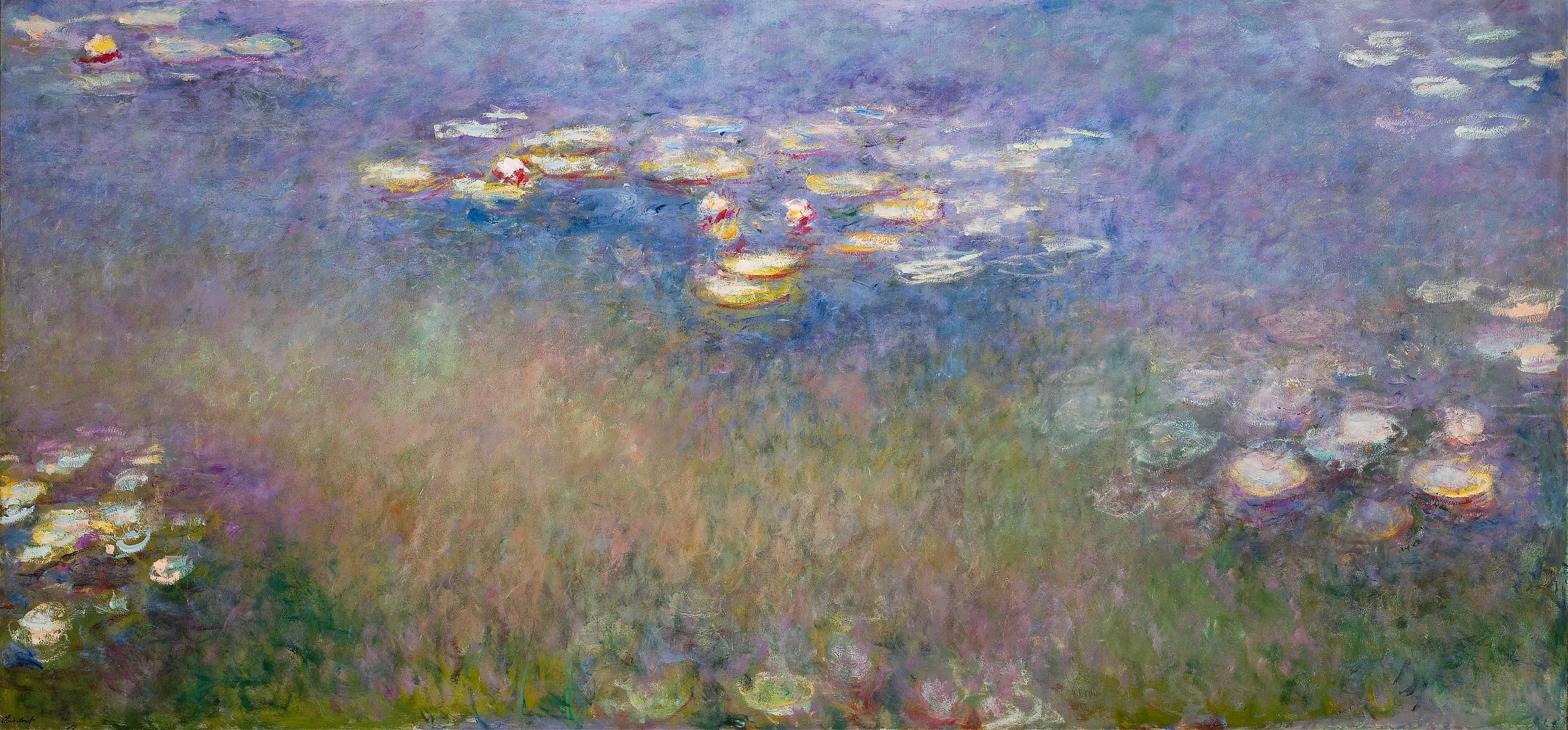
- Water LiliesClaude Monet, 1906
- The Japanese FootbridgeClaude Monet, 1899
- HaystacksClaude Monet, 1890
The three paintings inside will stay in your library.
Flat just dims. Depth pushes the content back, softens it, and lets the dialog sit in front the way a face sits in front of a blurred street. Nothing about that is native to screens. It was borrowed.
Architecture. Buildings are interfaces you walk through. Thresholds are onboarding. Sight lines are hierarchy. Material honesty, where wood is allowed to look like wood, is the same rule as not styling a link to look like a button.
Print and type. Grids, rhythm, and restraint were worked out on paper long before screens. A lot of why Vercel looks like Vercel is Swiss typography.
Music. Easing is phrasing. Stagger is rhythm. A success sound is a cadence. The copy sound on this site is a rising arpeggio because music already knew what "done" sounds like.
Physical things. Drag gestures feel right when they have momentum because Apple copied the physics of real objects. Pick up a well made tool and pay attention to how it stops moving.
Make it a practice
Two habits separate people who collect references from people who use them.
Capture them. A folder, an Are.na channel, a camera roll full of door handles and ticket stubs. Taste is trained, and this is the training data.
Translate, do not transplant. Ask what a reference does. How it directs attention, how it builds and releases tension, what it leaves out. Then rebuild that mechanism in your medium. Paco calls remixing a legitimate creative act, and it is, as long as you remix the mechanism and not the pixels.
The test for a good reference is whether you can explain what it taught you without showing it to anyone.
Resources
Depth - Rauno Freiberg translating film language, focus and staging, into interface layers.
Creative output - Paco Coursey on remixing as a real creative act.
The best things - Shu Ding on why the most memorable work is rarely the most complicated.
Are.na - A quiet place to collect references without an algorithm getting in the way.